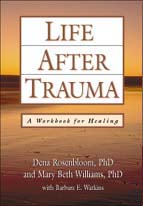
 by Dena Rosenbloom, PhD and Mary Beth Williams, PhD
This supportive workbook helps trauma survivors find and use crucial skills for coping, self-understanding, and self-care.
Full Description:
Trauma can turn a person's world upside down--afterward, nothing may look safe or familiar. This supportive workbook helps trauma survivors find and use crucial skills for coping, self-understanding, and self-care. Even when the worst has happened, this book shows how it is possible to feel good again. Filled with comforting activities, relaxation techniques, self-evaluation questionnaires, and exercises, the workbook explains how and why trauma can throw you for a loop and what survivors can do now to cope. Chapters guide readers step-by-step toward reclaiming a basic sense of safety, self-worth, and control over their lives, as well as the capacity to trust and be close to others. Readers learn how to protect themselves from overwhelming memories and to heal from trauma-related reactions that may be disturbing their day-to-day lives. Written by experts in treating trauma and based on extensive research, the workbook can be used on its own or in conjunction with psychotherapy. Table of Contents
- After Trauma: Why You Feel Thrown for a Loop
- What is trauma?
- Common reactions to trauma
- Supportive relationships can change following trauma
- Checking in with yourself
- Learning to relax
- Ways of Coping After the Trauma
- Trauma can disrupt how you cope
- Identifying your ways of coping
- Guidelines for coping effectively with stress
- Coping with negative feelings
- Staying safe out in the world
- Time out to relax
- Thinking Things Through
- Making sense of your posttrauma reactions
- Making sense of beliefs
- Tracking reactions to there source in changes beliefs
- Thinking through a belief
- Weighing the evidence of what you believe
- Feeling Safe; Being Safe
- How safety can be an issue after trauma
- What can safety mean?
- Dimensions of safety
- What does safety mean to you?
- Sorting out facts about safety from your reactions
- Strategies for protecting yourself
- Do you feel safe enough?
- Tracking reactions to beliefs about safety
- Thinking through a belief about safety
- Weighting the evidence on beliefs about safety
- Summarizing your work on safety
- What Does It Mean to Trust?
- How trust can be an issue after trauma
- What can trust mean?
- What can trust mean to you?
- Sorting out facts about trust from reactions
- Thinking through beliefs about trust
- Weighing the evidence on beliefs about trust
- Summarizing your work on trust
- Regaining Control in Your Life
- How control and power can be issues after trauma
- What can it mean to be powerful and in control?
- What do power and control mean to you?
- Sorting out facts about power and control from your reactions
- Do you have enough control in your life?
- Tracking reactions to beliefs about power and control
- Weighing the evidence on beliefs about power and control
- Valuing Yourself and Others
- How trauma con affect self-esteem
- What can value and esteem mean?
- What does self-esteem mean to you?
- Intimacy: Getting Close to Others
- How intimacy can be an issue after trauma
- What can intimacy mean?
- What does intimacy mean to you?
Epilogue: Healing for the Long Term
- Coping with Stress
- Getting Stronger
- Towards a greater meaning
- Appendices:
A. Suggested Readings and Resources
B. About Psychotherapy
C. Letter to Professionals
352 pages; 6 X 9;soft bound
Stock-Usually ships in 8-10 business days!
|